Physics-Driven Co-op
One Rope. Two Players. Same Problem.
The anchor-and-rope system creates puzzles where you actually need each other—timing and talking are both required.
Most co-op games let one person do all the thinking while the other watches. Not here. Playanchor's anchor-and-rope mechanic puts both of you in the puzzle. One holds the anchor, one swings. You can't solve it solo. The campaign runs forty levels that teach you how gravity and tension play together, then the challenge modes drop the training wheels—no checkpoints, 45-second rounds, physics that work backwards. This is the kind of depth you get from actually limiting yourself, not from piling on more stuff.
Made for couch players between 18 and 40 who finished Portal 2's co-op and thought, "that was fun but I wanted harder puzzles." Local multiplayer, split-screen only. No skins, no battle pass, nothing like that. You get into the next level by beating the one you're on.
How Playanchor Works
Eight things about the mechanics, the design, and what matters if you're playing co-op.
Anchor-and-Rope Is the Puzzle
It's not just window dressing. One player sets an anchor. The other one adjusts rope tension, length, and swing angle to hit the goal. Neither of you can just walk around — physics locks you down. That's where every puzzle comes from.
Both Players Must Communicate
Player A doesn't mention rope tension, Player B misses the timing. Player B doesn't call out swing momentum, Player A plants the anchor wrong. You'll end up with your own language for this stuff. It develops naturally every time.
40 Campaign Levels, Built in Progression
First chunk teaches rope physics. Middle section throws in moving anchors and obstacles. Final stretch adds timers and multi-step puzzles. Each block introduces something fresh — you don't plateau, you just keep climbing.
Challenge Modes Remove Your Safety Net
The campaign lets you restart at checkpoints. Challenge modes don't. You get an hour or so to clear all 40 levels in one go, or tackle single ones with 45-second clocks. Ironman, elasticity tweaks, less oxygen — the puzzle doesn't change, but the pressure does.
Physics Aren't Forgiving
Rope breaks under too much tension. Gravity runs in real time. Angular acceleration actually matters. Momentum stays with you — same as real objects. That's why communication is critical and why you'll need several tries to nail a single level.
Local Multiplayer Only, Full Stop
No online mode. Two controllers, one couch. You need another person in the room — that's the whole point. It's designed for solving puzzles together, not grinding solo.
Replayability Comes from Optimization
A level you beat in a minute-and-a-half gets fresh when you have 40 seconds or when rope stretches twice as much. Leaderboards track best times and fewest breaks. You replay because the system has real depth, not because you're chasing cosmetics.
$19.99, No Cosmetics or Battle Pass
You buy it once and that's the game. Harder levels unlock as you progress. Nothing is gated behind a grind — it's just how the difficulty ramps. Level editor and Community sharing are included.
What You Get
Four reasons to play Playanchor if you want actual mechanical depth and co-op that requires you to sync up.
Physics-Driven Puzzles
Rope tension, angular momentum, gravity. The physics creates the puzzle, not the other way around. You learn to predict what happens when you pull or swing—no memorizing sequences. Forty levels, each one adds a new rule to the same system.
Forced Synchronization
One player anchors while the other swings. Neither of you moces without the other's input. You'll start talking to each other real quick. Eventually you develop shortcuts in how you communicate. That's the whole game, basically.
Challenge Modes Scale Brutally
Campaign teaches you how the system works. Then challenge modes force you to actually master it. Ironman strips out checkpoints across all forty levels. Elasticity variants alter how rope behaves during a run. Reduced oxygen cuts you down to 45 seconds per puzzle. All of it is hard and worth replaying.
No Progression Systems or Cosmetics
You unlock harder levels by beating the easier ones. That's the unlock system. Custom level editor is built in. Community sharing is built in. Nineteen ninety-nine gets you full access, no cosmetics, no season pass. The game doesn't try to make you grind currency—it just wants you to get better at the mechanic.
Image Gallery
10 Slides

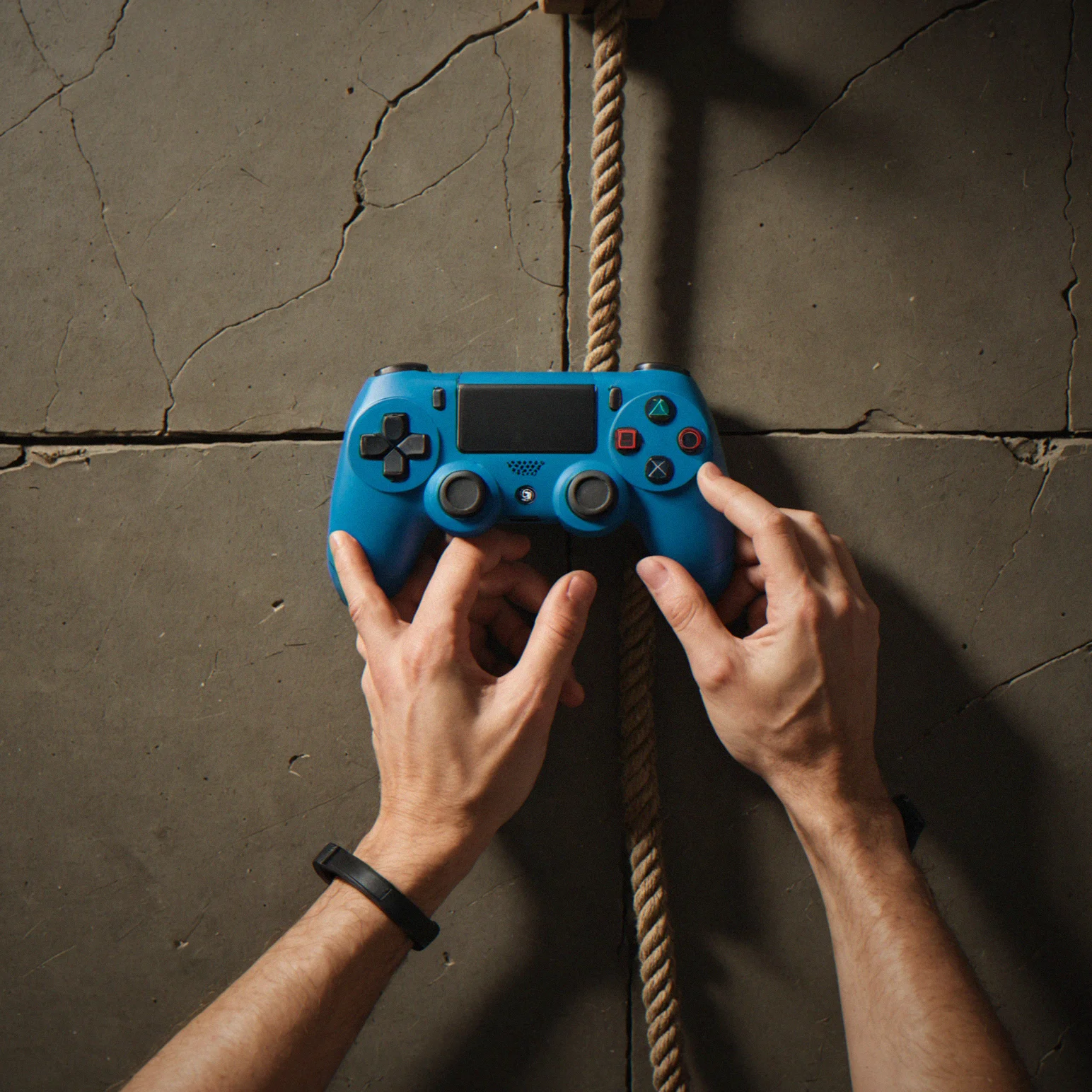
Two controllers on a couch. One player's anchoring a rope to the wall while the other gets ready to swing.
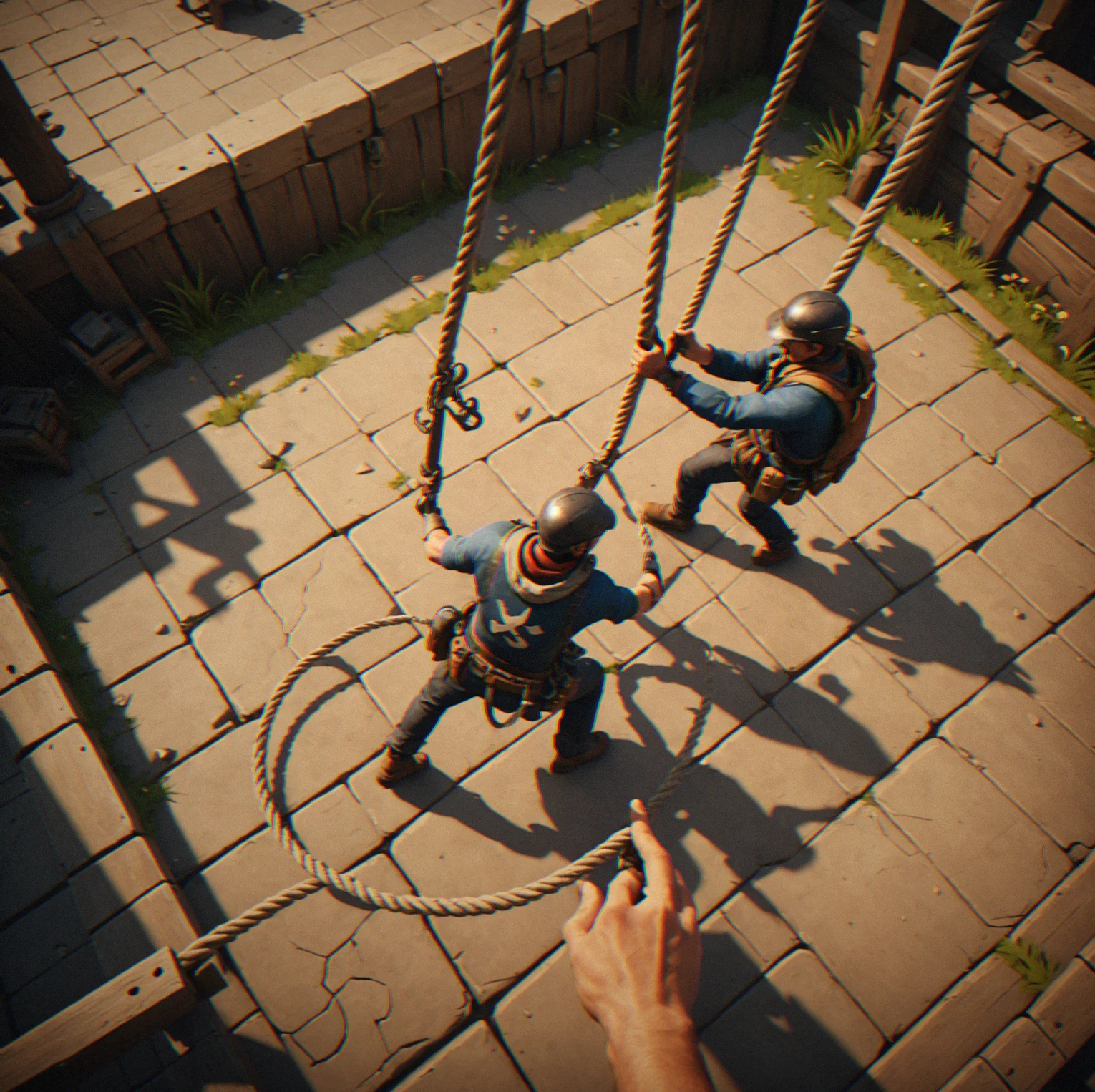
Player swinging acrpss a gap on rope, overshooting the landing zone on the first try.

Rope pulled tight at maximum strain, fibers showing stress, anchor point about to give.
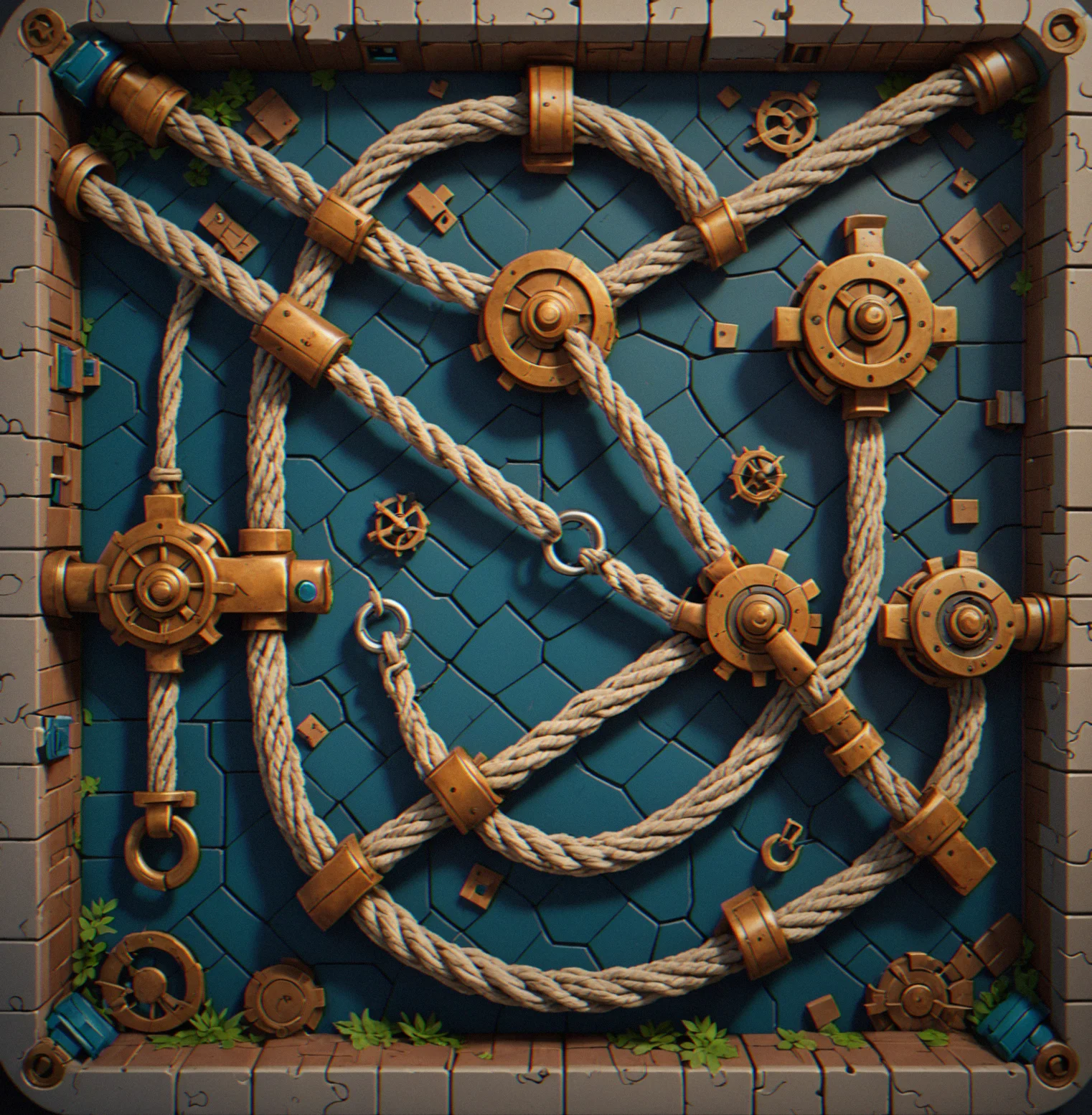
Multi-phase puzzle from above. Three anchor zones, moving platforms, and a central goal in the middle.
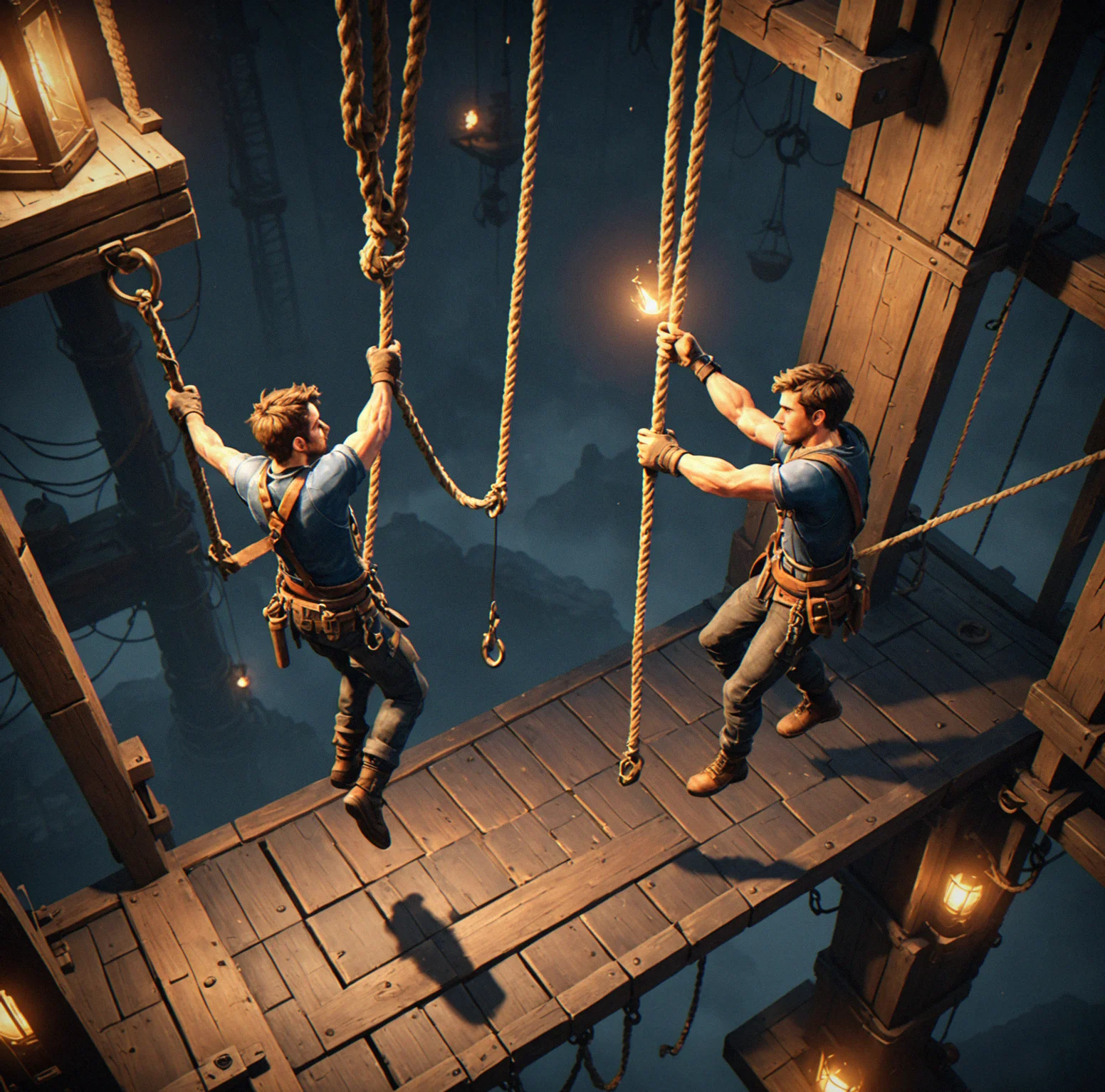
Both players hanging in mid-air from separate ropes, swinging toward the same platform from opposite sides.
Challenge mode timer with 45 seconds left. Both players working through a complex puzzle under pressure.

Level 28 with magnetic anchor plates, hazards moving around, and a rope that doesn't reach far enough for mistakes.
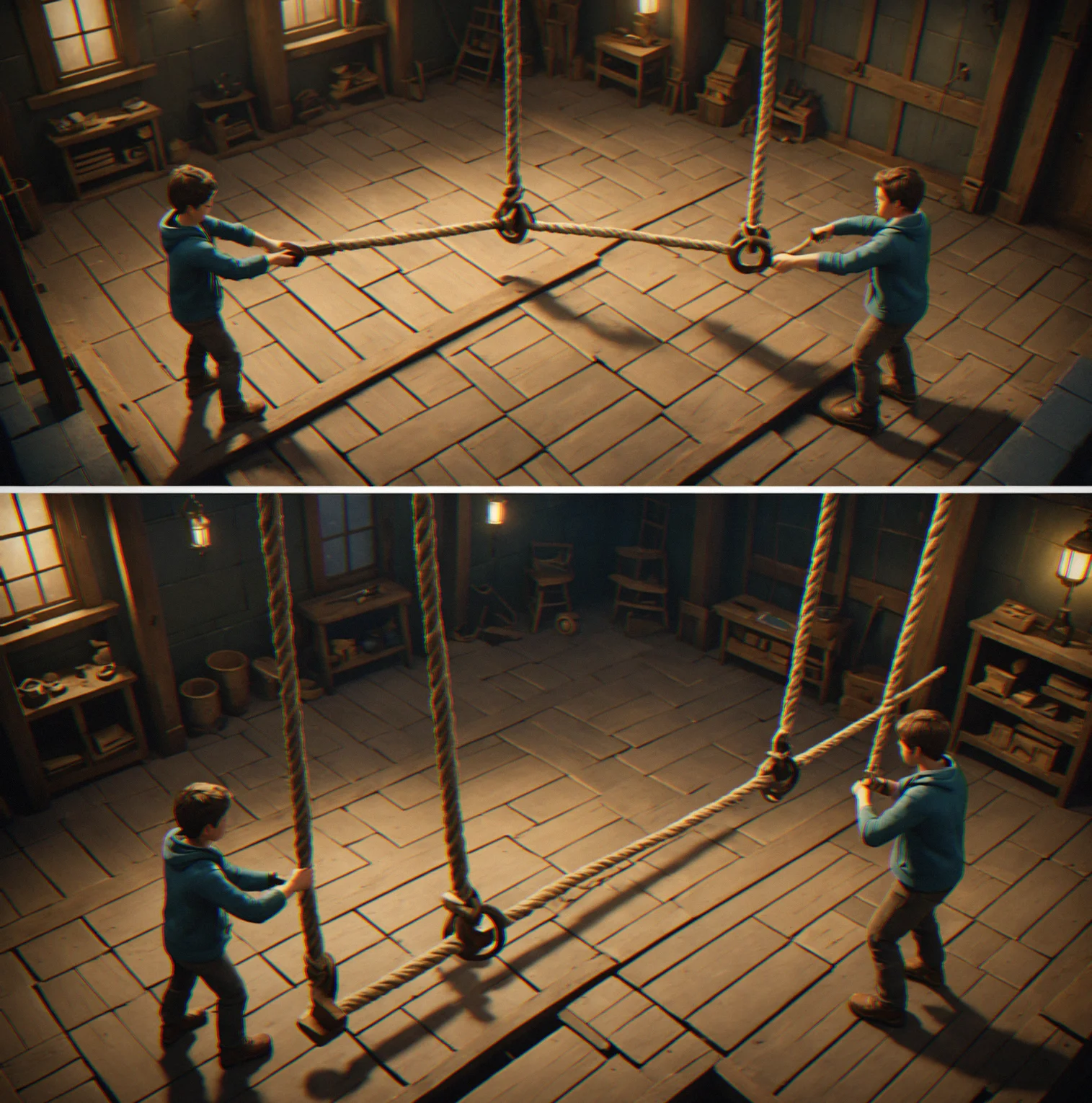
Split screen. Player A's rope controls on the left side, Player B's swing prediction on the right.

Rope snaps mid-puzzle. Both players sent back to the checkpoint after getting the speed wrong.
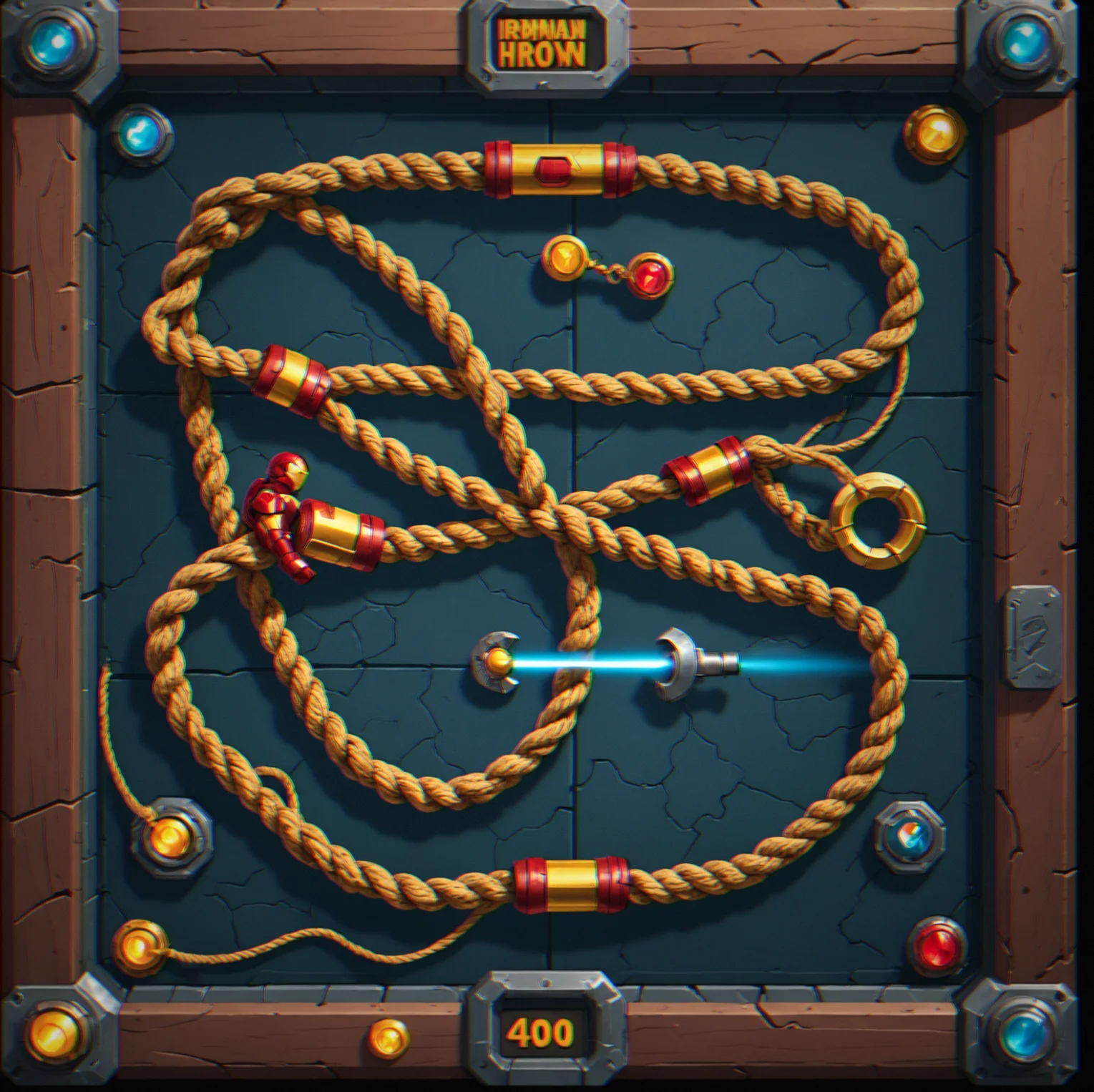
Level 40 complete. Screen shows total time, how many rope breaks you avoided, and an option to try the ironman challenge.
Levels 1–12: Learning the System
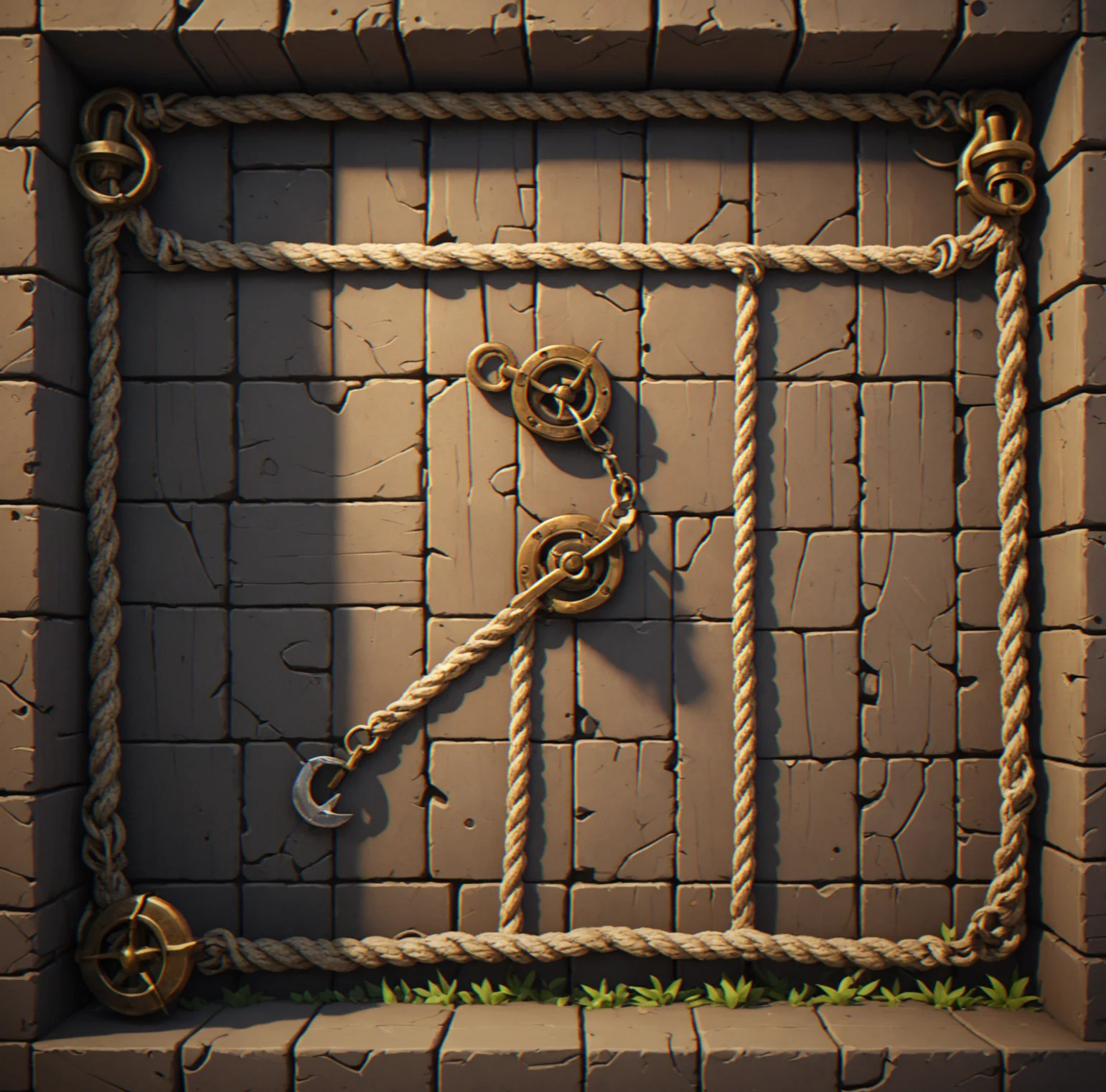
No pressure here. You're figuring out rope physics — how anchor angle changes your swing path, the way tension increases as you pick up speed, what goes wrong if you let go too soon or hold on too long. Puzzles stay simple. Single phase. Checkpoints everywhere. No moving platforms to worry about. By level 12 you can look at a setup and just understand what the rope will do. That's the whole point.
Levels 13–28: Layered Constraints
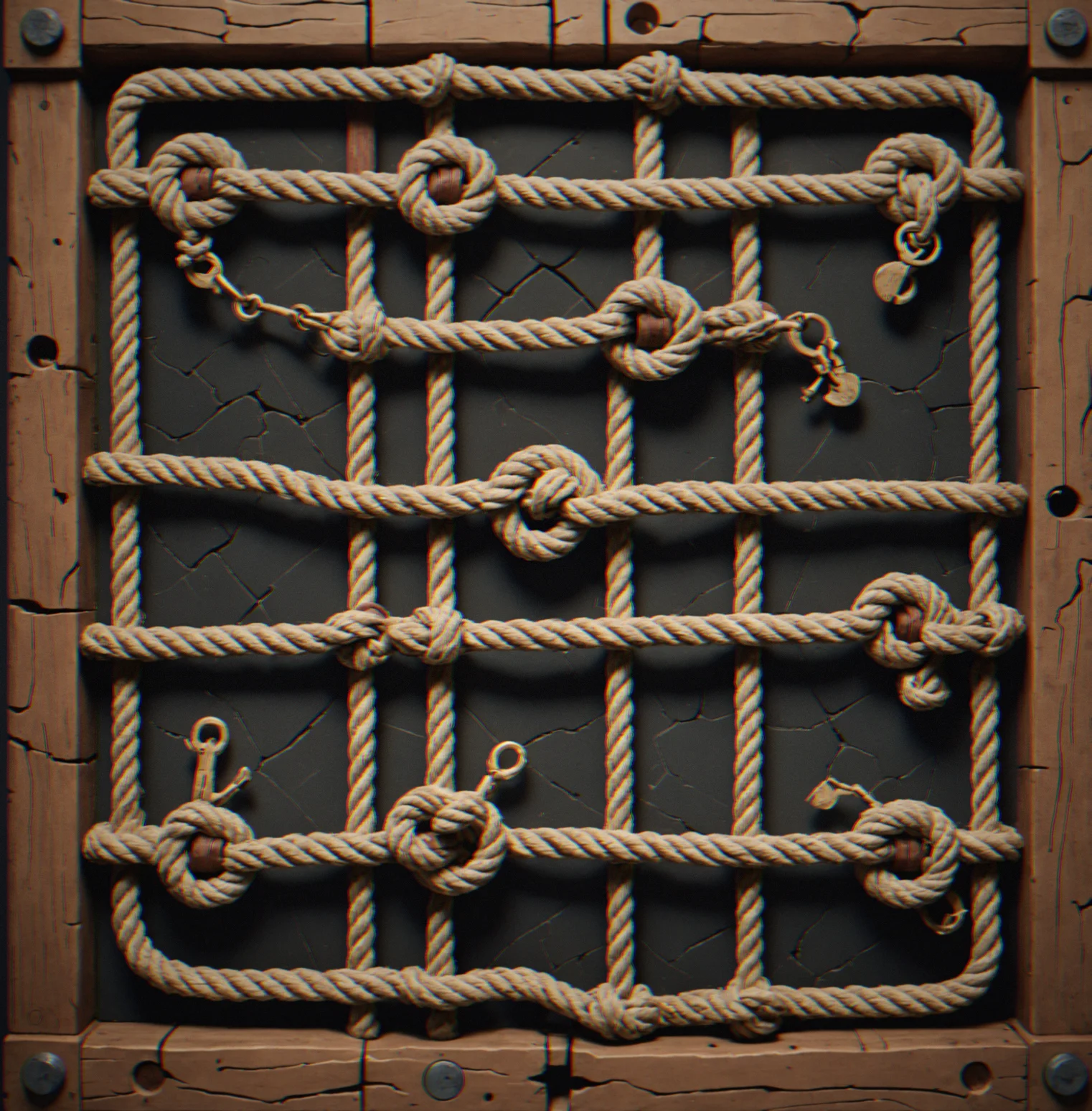
Moving anchors show up. Hazards that actually move. Puzzles that split into phases — you clear one chunk, the anchor shifts, then you're solving the next thing. The timing gets tight too. You can't sit and think about it. Your partner needs to be calling the shots in real time. That's when communication stops being optional and becomes essential. If you're playing solo, this is roughly where things get stuck.
Levels 29–40: Synchronization Tests
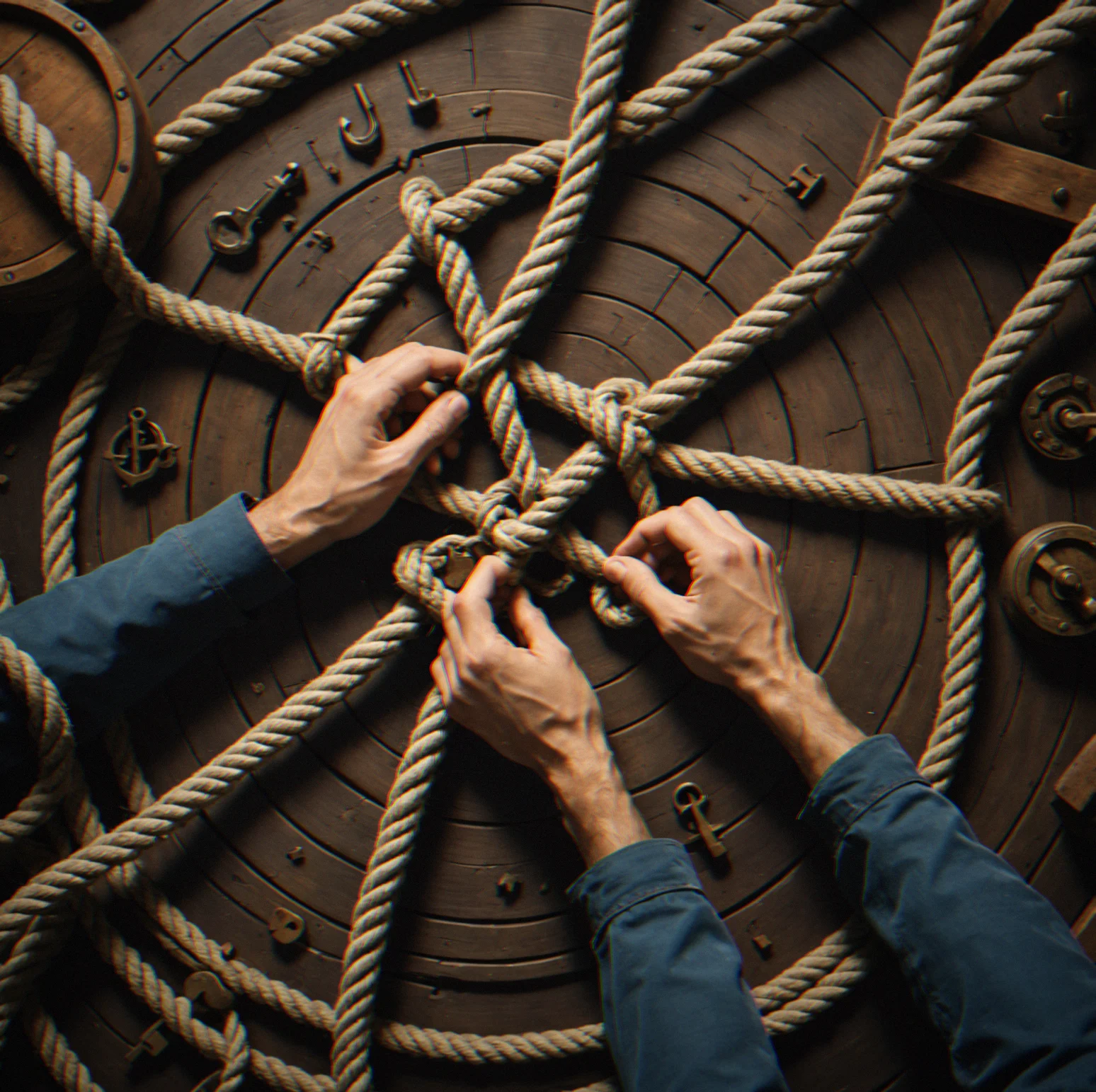
Both of you in the air at the same time. Rope elasticity starts varying. Challenge modes unlock at this point too — you get the same 40 puzzles but the constraints are savage. Ironman strips out every checkpoint. Elasticity doubles. Reduced oxygen mode? You've got 45 seconds per level. You've already solved everything, so now you're chasing execution. That's where the replayability actually comss from.
40 Levels Across Three Difficulty Bands
Playanchor doesn't gate progression behind time. It builds on what you've learned. Each band introduces something the previouus one didn't.
Frequently Asked
Most people ask these in their first hour. If you don't see your question here, check the mechanics section or look through the custom level editor docs.
No. Two players required. One anchors, one swings. You can't move independently. Playing solo breaks half the game and leaves puzzles unsolvable. Only buy this if you have someone to play with.
It scales. Early levels introduce mechanics separately. Level 13 adds moving anchors. Then dynamic hazards show up a couple levels later. By the time you're past level 15, you're layering systems together. Around level 28 you're juggling three things at once. The last stretch combines everything with either time limits or no checkpoints. The whole thing was planned out.
Rope snaps or you overshoot and fall. Either way you hit the checkpoint and go again. Main campaign checkpoints you after each phase. Challenge modes strip those out entirely — all 40 levels straight through, takes an hour to an hour and a half. Mess up a rope release on level 37 and you're back at level 1.
Challenge modes exist for this. Ironman removes checkpoints. Elasticity variants make rope stretch twice as far. Oxygen-limited mode gives you 45 seconds per puzzle instead of unlimited. You know the solution already — now it's about doing it faster or cleaner. Leaderboards track times and rope efficiency. Serious players finish the campaign and spend another chunk of time chasing records.
Steam, Epic Games Store, Nintendo Switch. All versions are the same — identical levels, same challenges, same physics. Local co-op everywhere. No online cross-platform support.
You technically can but it's clunky and misses the whole point. One button anchors, one stick controls rope. You'd be swapping the controller constantly. Get two controllers. The game expects split input.